





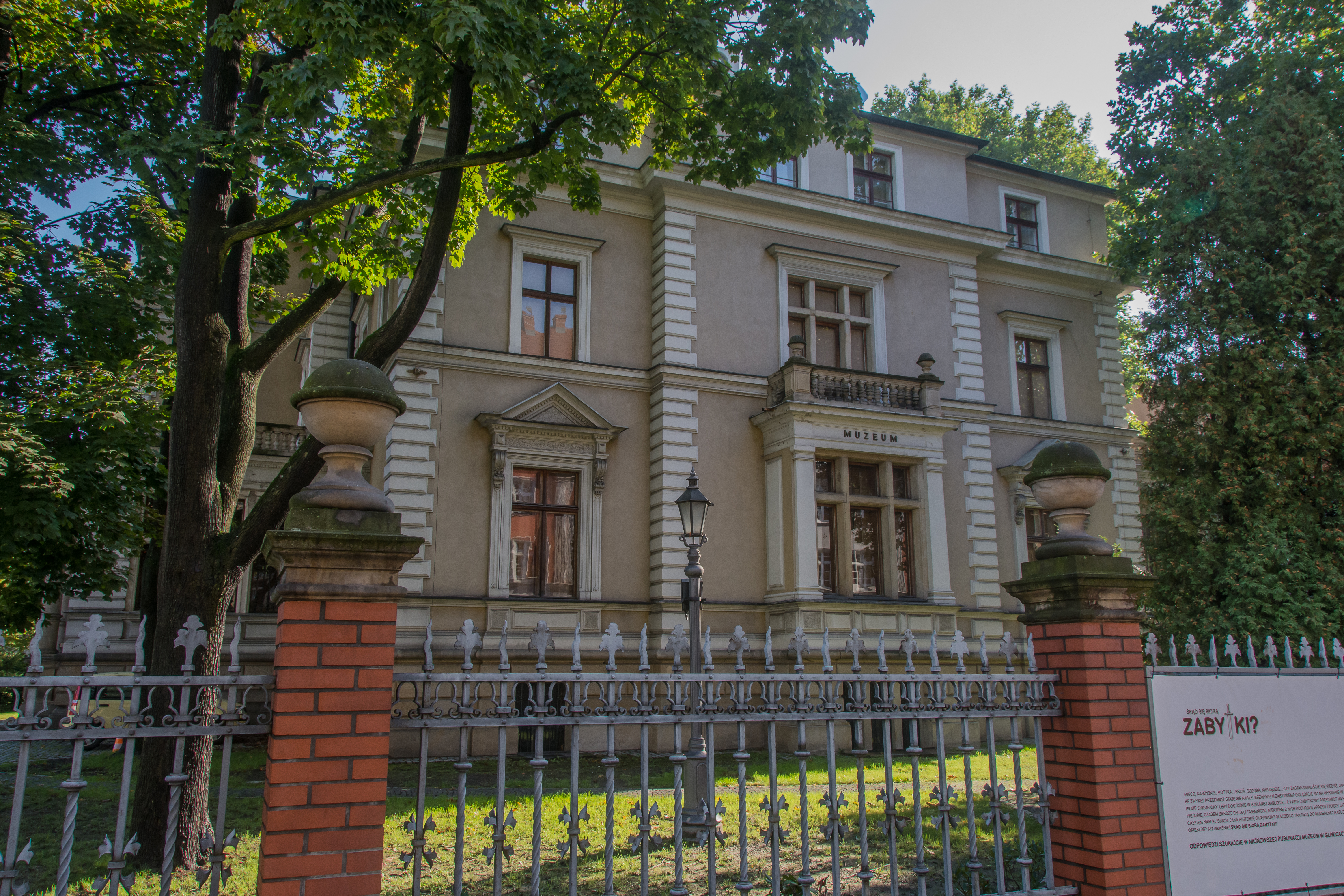
for. Muzeum w Gliwicach
The sculpture “Woman with a Jug”, commonly known as the “Gliwiczanka”, by the sculptor Wanda Demczyszyn-Wiśniewska (1956).
ul. Plebańska 2
Gliwice

fot. Muzeum w Gliwicach
The sculpture from the “Our Homeland – Passage” series by Krzysztof Nitsch, ul. Kościuszki (completed in 2016)
The composition symbolises a “passage” and invites reflection on the complex history of Upper Silesia and Gliwice, as well as on identity and continuity. It speaks of the human condition and of our struggle with time and destiny, using a symbol frequently found in the artist’s work – the leaf, a sign of transience and impermanence.
ul. Tadeusza Kościuszki 30
Gliwice


“Statue of a Woman – Mourner” by Hanns Breitenbach (1927).
A monument commemorating soldiers of various nationalities who fell on the fronts of the First World War.
Hanns Breitenbach (1890-1945) was a sculptor associated with the Modernist current and inspired by the New Classicism. In addition to monumental, idealised monuments, he is also known for his realistic portraits and for smaller, purely decorative figurines and plaques.
Księcia Józefa Poniatowskiego Street (Cmentarz Lipowy)
Gliwice

“Schoolgirl and Schoolboy”, 1922
The stone sculptures by Thomas Myrtek stand in front of the entrance to the Youth Cultural Centre in Gliwice (formerly the Craft Vocational School).
Thomas Myrtek (1888-1935) worked within the Expressionist movement, and his sculptures feature simplified, geometric forms.
Norberta Barlickiego 3 Street
Gliwice


fot. https://gliwice.nio.gov.pl/o-instytucie/struktura-i-wspolpraca/galeria-zdjec/
“Motherhood”, c. 1933 (sandstone)
Hans Dammann (1867-1942) – an outstanding sculptor who worked in Berlin. He worked within the Neoclassical movement. He was one of the most highly regarded creators of funerary monuments.
Wybrzeże Armii Krajowej 15 Street
Gliwice
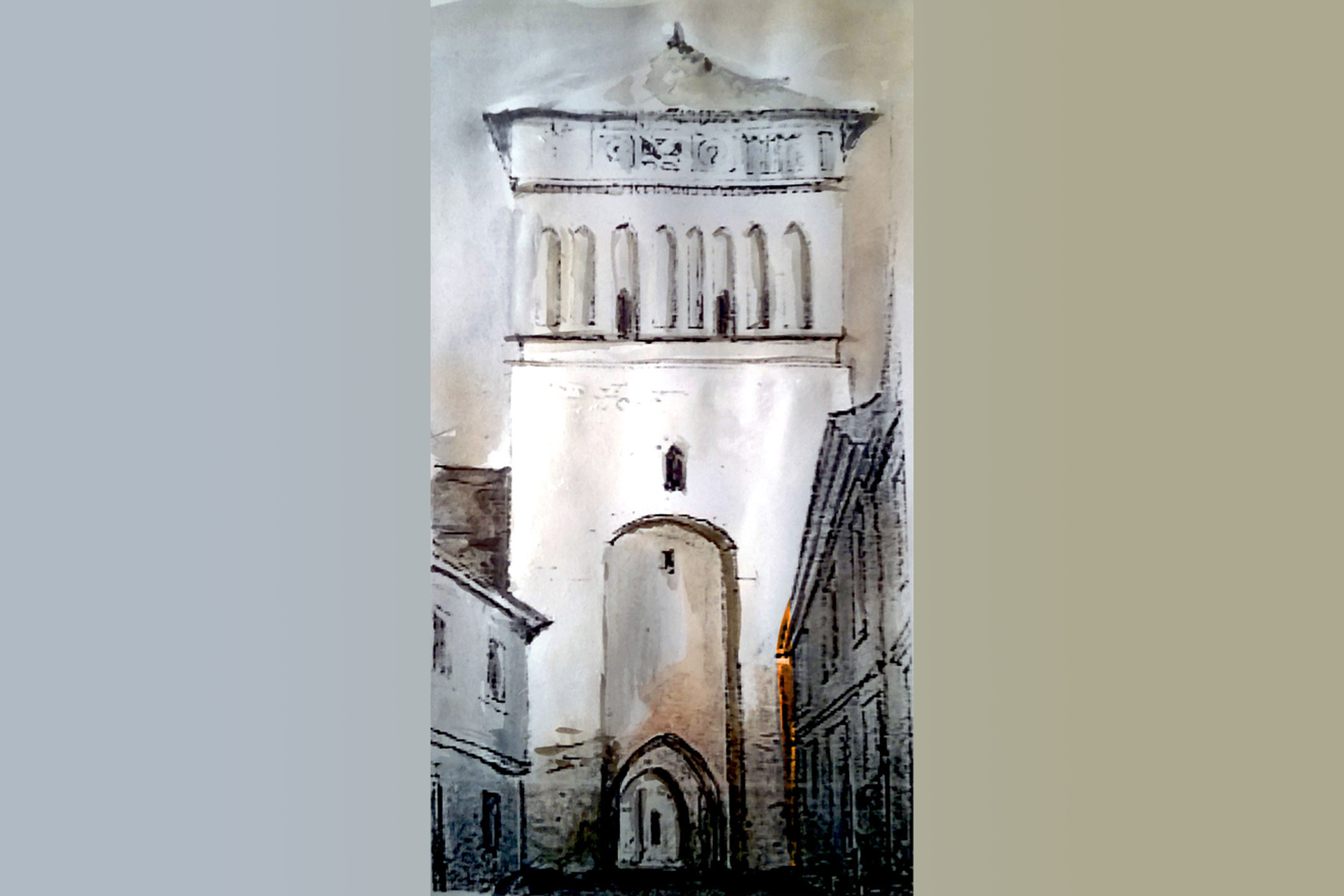
graphic: Ewa Pokorska-Ożóg
The White Gate (Bytomska) – was part of the Gliwice ramparts built in the fifteenth century. To this day, only fragments of medieval fortifications have survived, among them the relics of the Black Gate at the Slaughter Square. The White Gate was situated obliquely to the axis of the current Basztowa Street. Gate width was 10 ft (3-3.3 m). On the western side of the wali there were stairs to the upper floors of the tower. In the mid-nineteenth century (approx 1852) was dismantled with the tower above it by the then authorities.
ul. Basztowa
Gliwice
About Gliwice
Guides around Gliwice